Sep 4 - Week 3 - Meeting 6 / Body: Patterns of Body Connectivity / Duncan Moves
II
Introduction
Today we will review Laban's concept of body connectivity. | Fundamental patterns of total body connectivity was articulated by Bartenieff. It is also useful to acknowledge Hackney's six Fundamental Patterns of Total Body Connectivity as demonstrated in the videos bellow: breath, naval radiation (core-distal), spinal (head-tail), homologous (upper-lower), homolateral (body half), and contralateral (diagonal).
III
Learning Objectives
- Understand the application of the concept "body connectivity" in dance and movement
- Explain how "body" relates to the concepts related to Hackney's 6 fundamental patterns of total body connectivity
- Gain awareness of the possibilities that "the fundamental patterns" bring to the organization of movement.
- Experience body connectivity patterns by following Hackney's 6 fundamental patterns
- Reflect on the work done in class
IV
Main Lesson
1
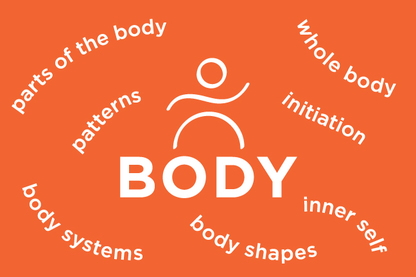
Initiation of movement starting from specific bodies
Connection of different bodies to each other
Sequencing of movement between parts of the body
Patterns of body organization and connectivity

4

Modern Dancing and Dancers: A Scholarly Exploration of Modern Dance
J. E. Crawford Flitch
Read: Introduction
https://www.google.com/books/edition/Modern_dancing_and_dancers/XotZEAAAQBAJ?hl=en&gbpv=1&dq=modern+Dance&printsec=frontcover
J. E. Crawford Flitch (2022). Modern Dancing and Dancers: A Scholarly Exploration of Modern Dance. Good PressA Clip from the movie Isadora (1969) Isadora is played by the great actress Vanessa Redgrave !
- Lateral
- Core Distal
- Upper Lower
- Naval Radiation
- Body Halves
- Spinal
- Cross Lateral
- Floor (Early patterns of total connectivity)
Assignment #1: Patterns of Body Connectivity
Question #1
To help memorize and remember the several subcategories of body mentioned at the very
start of the lesson, I came up with two acronyms. Prioritizing the order at which they were
presented to us in the lesson, the first acronym is straightforward: ICSP – “I see space”.
I- Initiation of movement from specific bodies
C- Connection of different bodies to each other
S -Sequencing movement between parts of the body
P- Patterns of body organization and connectivity
On the other hand, if the order is irrelevant (or at least not very important), this is the
second acronym I came up with, prioritizing memorability: SPICE.
S- Sequencing movement between parts of the body
P- Patterns of body organization and connectivity
I- Initiation of movement from specific bodies
C- Connection of different bodies to each other
E- Enjoy yourself through the process
ICSP strictly follows the order at which we were taught the body subcategories in the
lesson, with the little “I see space” phrase to help remember it.
SPICE lists the subcategories as a set of main rules rather than an order to follow. It is
my personal favorite, since it’s a lot more playful and potentially meaningful to us students. The
idea of it is to encourage you to add spice to your dance, meaning that by following the
subcategories you will not only be dancing and showing expression through your body
“correctly”, but also enjoying the whole process of it.
Question #2
As mentioned in the lesson, Peggy Hackney identified six developmental patterns of
body connectivity, which we followed through the whole lesson and beyond: breath,
core-distal, head-tail, upper lower, body half and cross lateral. After watching the videos and
trying out the exercises for each movement pattern myself, this is the breakdown of my
experience and observations:
I must admit that it seemed a bit unnecessary at first, but each of the movements for body
connectivity do truly have a real purpose, and you will discover and develop a connection to
your body you probably have taken for granted. At each exercise, aimed at different areas, you
connect your mind to your body and give it a rhythm to follow. For example, in the Standing
exercise, (although there’s no video dedicated to it in the lesson, it is displayed in the
Upper-Lower video), the aim is to control your breath and find one or two points of your body
which connect to it, while also connecting your body to the ground through your feet.
You focus your energy from the inside and tune in your mind with your body. On the Core Distal exercise
video, we’re told “This is the sense of the starfish that swims” upon the lesson that our body has
six distal edges: head, tail, two arms and two legs. Although in this exercise we focused more on
the breathing while contracting and extending the six points to and from our core, and the Upper
Lower exercise only points out the amount of movement you have in your head and tail, the
symbolism of the starfish only made total sense in the Cross Lateral exercise, where we touch
our arms with the opposite side’s leg. After this point, I can’t unsee the star shape in my body’s
points when I move, and I feel like it subconsciously helps with coordination. The exercises on
the floor felt like a dramatic theater act, which points out the importance of identifying our
bodies’ points and the movement we can apply on them to be able to express emotion through it.
Although some of the exercises displayed in the Laban-Baternieff video may look a bit
funny in the beginning, you don’t need to go too deep to find out the point of every exercise.
Each one aims at a specific part of the body to not only help expand the range of motion in each
joint and muscle, but also train the coordination of mind and body. Furthermore, observing the
graceful movement in all of the exercises displayed points out the importance of breathing and
controlled force and strength.For a dancer, it is of utmost importance to engage in these exercises
to know their bodies’ limits in different points, and to train each part to better express themselves
through dance.
Question #4
The introduction to J.E. Crawfords’ book addresses the early 20th-century revival of
dance as an important artistic phenomenon, calling it a spontaneous, worldwide renaissance
wherein various dancers came independently with a common passion but with no common plan.
Flitch recognizes the difficulties of writing about dance criticism, particularly because dance is a
fleeting art form that leaves no permanent trace and is so dependent upon the dancer's individual
presence and characteristics. He admits the weakness of his own observations, having left out
some notable performers, and maintains that omission does not imply disregard. The critic also
shows the competitions among different dance forms—ballet, classical, and skirt-dancing—how
far-divided the field is. Lastly, Flitch positions his work as a personal inquiry meant to bring
about personal reflection and deeper critical thinking in the reader, rather than to claim absolute
authority.
A Note to Remember:
Fundamental movement patterns have emerged throughout
development and are omnipresent across cultures of the world.
This statement highlights the universality and deep-rooted nature of fundamental
movement patterns in human experience. These patterns—crawling, walking, reaching, or
twisting, for example—are not merely acquired behaviors but are embedded in our
developmental maturation from infancy. The fact that they appear in all cultures attests that
movement is a universal human language, guided more by biology and lived experience than by
geography or tradition. In dance, recognizing these patterns enables a more genuine, expressive,
and natural connection to the body and to others.


Comments
Post a Comment